Settling in Japan

ToriiSo, after a few awful mishaps that shall not be named, I’m in Japan, in my place, have power for my computer, and just waiting for classes to start on Monday. For kristy, since she asked in the previous thread, I’m going to be at this school for 1 to 2 years (however long it takes me to become fully fluent) and then I hope to find a job and work here for a few more years.

I’m not quite returning to blogging yet, as the classes will be intense and I’ll need to catch my stride (here’s to hoping I can get a good sized study group going…) but I wanted to update all of you and send out the love. I’ll try to respond to comments on the Male Gaze thread as soon as possible.


My Last Post For A While

Yeah, I know, great day to make this post. “Hey readers, instead of doing a super funny April Fool’s joke, I’m letting you know that you won’t hear from me for a while! How long? Well, however long it takes me to 1) get to Japan, 2) settle in, and 3) feel hopelessly lost without my blog.” Yeah, well, that’s life. I’m off tonight to Seattle to spend the night so I don’t have to get up at like 3am to catch my 10am flight out tomorrow. Then it’s unpacking, placement testing, and then school begins.

Ariel has agreed to hold down the fort, and we may have a guest blogger or two (FYI, if anyone’s interested in guest blogging – now or later – drop me an e-mail and I’ll see about hooking you up). I didn’t get all my posts done that I wanted to, but at least I finally got the one about Ragnell’s call for subs up. Although it’s kind of half-assed. And I probably won’t get to reply to any comments for a while. Oh well.

Hopefully I’ll be back on the web by the 4th, but knowing my luck something will go wrong with my LAN connection. But I’m not a pessimist or anything. Anyway, wish me luck and I’ll be back to blogging as soon as I can!


Obscuring the Male Gaze

I have been meaning to make this post for ages now (pretty much ever since Ragnell put out her first call for subs for the feminist carnival), but unfortunately it has come at a time where I’m freaking out over my last minute arrangements. This will, in fact, be my last real post for a while (more details to follow in my actual last post for a while).

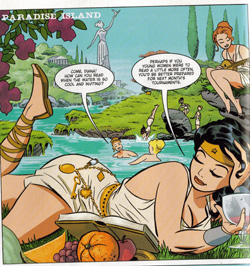
When Ragnell put up what she thought was a fairly neutral image of Diana (that’s Wonder Woman, the Amazon warrior for justice and peace and stuff, for those of you not in the know) reading. I looked at it and “perfect example of the male gaze” is what stared right back at me. Me – thinking nothing of making such a comment on a blog by a woman who waxes poetically about the colour yellow and what it means when used in a Green Lantern comic – well, let’s just say I was surprised that pretty much none of her regulars agreed with me. At all. Even Ragnell herself wasn’t fully on board with my interpretation.

And that got me thinking: Have we become so desensitized to female sexuality that it reads as “neutral” to us when not in an obvious setting?

I. “Male Gaze”? “Objectification”? Say what?

Before we get into the actual image critique, I’d like to clarify what I mean by “male gaze” and “objectification”. A “gaze” in this instance refers to the mesages conveyed to us, the people viewing the image, by said image. Specifically, the “male gaze” is pertinent because most comic book audiences are assumed to be male. I’m going to turn to Wikipedia for more information. While the passage focuses on “advertising”, the same arguments can be made in terms of this comic panel.

This idea of power relationships within the gaze can be continued to analyse gendered power relationships in the depictions of women in advertising. Some advertising presents women in a sexual manner, and it is argued that this degrades women because of the power that the gaze provides for heterosexual men viewing these advertisements.

In short: I believe that the way the artist has chosen to depict Diana (and to a lesser extent, the other Amazons) puts her on display for the presumably male audience. In that sense, she is objectified. Which leads me to my next explanation.

Objectification, in its fullest sense, is to turn a human (or, in this case, the written/drawn representation of a human) into an object. I don’t think that the artist has completely dehumanized Diana in the panel, but I do believe that he has appropriated her sexuality for the pleasure of his viewers. Since she’s not real, she doesn’t have a say either way, but I think it’s important to see how objectification in popular culture can bleed into the way people view and treat actual people.

II. The Making of an Amazon Utopia

Exhibit A: Original
Exhibit A: Original

This is the image in its original, unaltered form. On the surface, it seems like the “Paradise Island” the text at the top says it is: blue skies, blue water, statues and temples (reminiscent of Greek/Roman society, which is a time that Western society associates with civility, peace, and great learning). The women are splashing around in the water, playing instruments, reading, and being altogether happy. And the fruit and wine glass are a nice touch: we often associate such items with wealth and leisure.

That reading is where most of the commenters stopped. And, indeed, it’s the reading they kept bringing up every time I was like, “x, y, z is why I see objectification.” And, I can understand it. There are many elements to a carefree utopia here. Diana isn’t breaking her back to puff out her boobs, and she actually has an outfit that has some give in it. Although, as one commenter pointed out, there’s no way anyone would ever actually be able to read over their shoulder like that.

Exhibit B: Without all those pesky distractions

I’ve taken the liberty to present an image of Diana alone. Although she’s not the only problematic image in the scene (in my comments I took issue with other elements of the group, as well as the depiction of the group as a whole), she is the one our eye is drawn to since she’s in the forefront and the largest element in the panel.

Hopefully now the reason behind my sexual objectification reading will be more apparent. Without the idyllic elements as a distraction, it’s easier to see Diana’s cleavage, her slightly spread legs, and her half-lidded eyes. Even the wineglass doesn’t look so innocent anymore. Still, perhaps she is not “come hither” enough, so I have quickly thrown together a third image.

Exhibit C: Now with pillows!

I wanted to put her on a bed, but creating a convincing one would have taken too long. Still, red pillows are enough to set an erotic tone. Can anyone now tell me with a straight face that Diana isn’t even somewhat looking like she’s ready for a romp in the hay… er, pillows? That there’s nothing sexual about her? All I did was add a few red pillows, folks. That’s it. I have a thousand and one pictures of me (reading, computing, whatever) that I could add red pillows until the cows come home and I still wouldn’t look sexy.

III. Conclusion

One of the reasons this picture jumped out at me so clearly was that, on the surface, it was innocuous. It wasn’t the overt T&A, dehumanization shot that most female super heroes have to contend with. Just a nice, sweet scene with Diana reading while her sisters play in the water. My point, however, is that even in scenes that are supposed to be “neutral” women cannot escape the burden of being the sex class. Diana is not supposed to be seen as sexual in this panel. She is supposed to read as neutral, and perhaps a bit nerdy.

Yet, the sexualization of women is so ingrained in our culture, that a women’s paradise is still drawn for the male gaze, with T&A (literally) at the forefront. In some ways, this kind of thing is more insidious than the obvious reduction of women to sex objects that is found in most comics; at least then most people can see what is being done. Here, I’m not even sure that the artist himself realized what he was doing. And that is a scary thought.


When will I get arrested for "driving while atheist"?

So, apparently the University of Minnesota did a study that found what every American atheist, and really anyone who keeps up with the Religious Wrong, already knows: Americans hate atheists. And think that religion is the only way to have morals. Because, you know, people are only interested in being good human beings when the threat of punishment looms over them.

If you’re wondering about the snarky title to this post, however, it’s a reaction to the title that UMNnews choose to put on the piece: “Atheists identified as America’s most distrusted minority, according to new U of M study”. While the people taking the survey apparently put atheists at the bottom of their list (below “Muslims, recent immigrants, gays and lesbians and other minority groups”) in terms of “sharing their vision of American society,” I don’t think that’s enough to qualify us as the “most distrusted minority”.

Just a guess, but I’d say it’s less that we’re actually the most distrusted minority and more that people feel okay in admitting they are prejudiced against us. Which is a mixed blessing. On the one hand, they don’t have any reason to even pretend to respect us. On the other, they, well, don’t pretend to respect us. But, really, just because someone thinks that they aren’t prejudiced against other minorities, doesn’t mean that it’s the case. So, I’ll think I’ll bow out of the “which minority is the most distrusted” game and simply say that, you know, life isn’t as simple as one survey makes it seem.

Via Bitch | Lab


Blog Against Heteronormativity Day

Because one cannot have to many days to blog against bad stuff, blac[k]ademic has decided to start a Blog Against Heteronormativity Day. I don’t know if I’ll be able to get a submission in (although maybe Ariel will *nudgenudge*), but it’s definitely something I want to do.

For those of you interested (and you all should be!), it’s going to be on April 22. See the linked post for more details, and be sure to show nubian your support!


Happy Birthday to Us!

At exactly one year ago today, OS.CB was born. Scant months after the (now defunct) Shrub.com Articles were being written, I realized that I wanted more than just one day every three months to shout from my soapbox. Couple that with my introduction to the feminist blogsphere and… well… here we are. Over the year this blog has grown and changed for the better; we’ve gained a contributor and lost one, crystalized into a site that discusses intersections between feminism and other areas, and become one of the many links in this wonderful community.

I’d like to thank Ariel for her contributions, all of my readers (both commenters and lurkers) for their support, and all of my blog friends who work hand in hand with me while we build our little niches on the net. So, thank you all, and please join with me in wishing our blog a very happy first birthday!

As part of the celebration, I’d like to highlight some of my favourite posts from this year.

On Feminism

June 28, 2005: Feminism is about Choice

Well, I rediscovered this little gem and decided to add it to my Feminism 101 links. It’s basically a rundown on why I think choice is an intrinsic part of feminism. I think this is where I began using my pet terms “cult of masculinity” and “cult of femininity”. Yay.

Highlight:

But, get this, feminism isn’t about hatred, it’s about giving people the choice on how to live their lives. It’s about letting women choose to use power tools, to read romance novels without shame, to work on the same level in the same jobs as men, to be valued for the work done at home and not be seen as “lazy” or “freeloaders” because they don’t earn a wage. It’s about letting men choose to play with Barbies, to watch sports on TV, to be able to enter “caring” professions without being branded a failure, to be able to contribute to the work done at home without being seen as some bumbling man incapable of even the easiest domestic tasks. It’s about seeing those who don’t fit into the binary of “man” and “woman” as people instead of freaks, to allow transsexuals to explore their gender identity without fear of being teased or worse, to stop the barbaric hospital procedures that force the intersexed children who are born with both a penis and a vagina into being “female” by removing their outward male organ, to let those uncomfortable with the implications of male and female exist as they are. It’s about all that, and much, much more.

November 22, 2005: Think women have achieved equality? Think again.

An extensive list of gender inequalities that exist in Western societies. Sadly, for its length it still only manages to touch the tip of the iceberg on the issues of equality (or the lack thereof).

Highlight:

Libby discusses her experiences with the “women are equal already” sentiment that many young people (and some older ones too) hold. I, in my typical fashion, went off on a rant about how much I hate that. And, again in my typical fashion, I want to take the opportunity to elaborate on my point.

Putting the “Geek” Back Into “Feminist”

April 28, 2005: Games Even Your Girlfriend Can Play!

Tired of all the lists of things that you, as a woman, are supposed to want out of whatever technology being hawked? Yeah, me too. The first of many in a category I later called “for her”, “Games Even Your Girlfriend Can Play!” is a deconstruction of the sexist language employed in an article of similar title.

Highlight:

Marginalization in the gaming industry is nothing new to me. I mean, having boobs and a vagina and identifying as female is obviously enough to exclude me from that Good Ol’ Boys Club™. If I do venture in, it must only be through a boyfriend (since all good boys and girls are heterosexual) who will introduce me to fluffy games, like Bejeweled and Nintendogs, which are not too hardcore for my weak constitution. Do I sound bitter? Well, after spending most of my twenty-two years seeing mainstream magazines, websites, and other gaming publications catering to guys, and only guys, I think I’ve earned a bit of bitterness. I don’t think it’s too much to ask for me to not have to go to a female-oriented gaming site in order to be included.

December 4, 2005: Because sexual harassment is hilarious

Video games are not real life, but they do intersect real life. Using the case study of a fan-made Japanese game, I discuss two intersections here: 1) drawing off of real life phenomena, and 2) sending messages to players.

Highlight:

He starts out really well with the humiliation angle; one of the best tools for control is shame. Humiliating a woman (or girl) by exerting ownership to her body (in this case, the unalienable right to take pictures of her private areas) is one of the oldest tricks in the book. I think this game displays this tactic quite obviously, but in a way that reinforces its ideology. Certainly, the amount of people who didn’t think to comment on its use of women speaks volumes about how invisible this issue is, even in our so-called “equal” Western societies.

December 24, 2005: Top “Geek Girl”-Friendly Rules!

What all those “What Women Want [from technology]” lists are really saying.

Highlight:

Do you want to get your girlfriend or wife into technology, but you’re afraid she’s too feeble minded to be able to appreciate your magnanimous gift? Have you run out of gift guides to scour, but still need a gift for the girl “geek” in your life? Well, fear not, friend! You’ve come to the right place. This list will give you the skills that you need to decide what pieces of technology are and are not appropriate for the little women in your life!

January 2, 2006: All we want for the holidays…

Yet another deconstruction of the Othering of geeks who happen to be women, with the bonus inclusion of another “list for her”!

Highlight:

Why, you may ask, do I have a HUB on me? Do I subscribe to their magazine? Well, no. I was at an electronic’s store with my cousin, picking up some stuff to mod my GC with, and the cover caught my eye. One look at it should tell you why. At first it was just that I wanted to explore the image itself: What was the significance of putting a woman on the magazine’s cover? What about the use of glasses, a white collared shirt, and bound hair to make her a non-sexual nerd? How does this representation compare to the oversexualization of geek women that is becoming a part of the status quo?

Eradicating Divisive Discourse

September 20, 2005: Gender: Making a Caste System Into a Democracy

Caste isn’t just for India anymore. Looking to our own backyard, we can see how it can be a word used to describe the gender essentialist approach. In most Western worlds, we believe that “democracy” is a given, but if we don’t apply the principles to our personal life – letting people have a free choice in how they want to express (or not express) their gender, for instance – then can we really claim to be adhereing to the very system we covet?

Highlight:

Even if you believe in gender essentialism – a belief system yet to be proven, or even strongly supported, by science – then giving people the choice to act in a way that befits them hurts no one. If boys are “naturally” suited to x and girls are “naturally” suited to y, then in a neutral environment they’ll gravitate towards that anyway. If girls don’t like science, then why go through extraordinary measures to keep them out? If all boys are so tough, then why take such extreme measures to shame, and in some cases injure, those who show their feelings or other “weaknesses”?

September 23, 2005: Parents are from Mars, Non-Parents are from Venus

An attempt at bridging the divide between parented feminists and chilfree feminists (with feminsits who aren’t parents yet somewhere in there, too). While I got burned by Dru Blood, the main party I was trying to reach out to, I still think it’s important for us to stop making one’s stance on children (to have or not to have) a deciding factor in who can be in the feminist club or not.

Highlight:

In my studies on the matter as both a feminist and a childfree woman I’ve found that it is the very same parts of the patriarchy working against both sides of the divide: the institutions/social conventions that want to force mothers into some pre-conceived notion of motherhood (and punish them when they don’t fit into them perfectly) also work against childless and childfree women (and, to a lesser extent, they also work against fathers and non-parent men). One glance at the childfree livejournal community shows that, beyond the anti-[bad]parent venting, many posts are about the frustrations that childfree people face when total strangers shame them for not making the “right” reproductive choices. Having lived in mostly liberal areas, I haven’t personally encountered some of the worst horror stories, but I have had to get into more than a few terse conversations with my friends over my choice to be childfree. The worst I got was my uncle, who I love very much, calling me an “idiot” for wanting to get a tubal ligation.

Other Stuff You Should Read

December 29, 2005: On Chivalry

A treatise on why chivalry is not good manners. In it I discuss why my wish to be treated a certain way is not tantamount to me trying to kill your romance. And, I promise, replacing the code of chivalry with simple good manners will not cause you or your SO to spontaneously combust.

Highlight:

Chivalry, in its original form and the bastardized version that’s touted today, may include common courtesies but the gendered slant takes it out of the arena of strict good manners. It’s good manners with conditions: I’ll open this door for you if you’re a woman, because I’m supposed to be nice to women. I’ll buy dinner for you because you’re a woman. I’ll do this and that because you’re a woman and my parents told me that women need/want to be treated this way. Not, you know, because we should be kind to those around us.

February 14, 2006: Game of Hearts

Hey, I want a chance to plug my creative writing skills. So go read my short story. The shortness compells you.

Highlight:

“Answer me, you slut!” “Whore!” “Hey, baby, you want some of this?”

Don’t answer. Keep your head down. Don’t speak. “Whoa there, little lady. Why don’t you just come here with me?” Don’t speak! But, he’s touching, he’s grabbing – No. You can’t speak. Those are the rules. If you speak, he wins. They win.

Whew, now that was a timewarp and a half! It’s amazing to see which of my values have changed and which have remained the same. I hope you have as much fun reading the posts as I did re-reading them. And, even if not, please join in a warm shout-out to me by wishing us here at OS.CB a very Happy Birthday!


Ultimate Utopia, Indeed

Ultimate Utopia...?
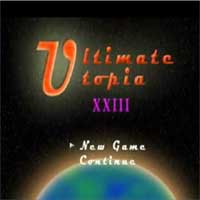
When Squaresoft meets fans with video skills you get… Ultimate Utopia…?

So, OS.CB reader darth sidhe pointed me in the direction of a fan-made flash movie of a live action RPG. It’s actually a pretty well done production and many parts of it I was nodding my head and saying, “Yep, that always happens to me!” Now, let me make it clear right off the bat: I liked this movie. I thought it was a fun, funny, and well-done piece.

But I am nothing if not a feminist interested in the intersection of gender and video games, and so it logically follows that when watching this, even through my enjoyment, I spotted areas that were problematic in terms of gender representation (the racial representation didn’t sit right with me, either, but that’s not really my area of expertise). And me, being the obsessive blogger I am (packing for Japan? taking care of last minute arrangements for school? never!), wanted to blog on it. So, watch the flash movie then come back and read what I have to say about it (I command thee!).

I. The Making of a Utopia

I find the choice of name (“Ultimate Utopia”) to be rather interesting. I don’t know if it’s based off of a name of a game that Square released, or if it was just randomly pulled out of a hat of “likely names for a Square game”. Either, or neither, is possible. But, especially given the discussion on what makes up a utopia over at Ragnell’s place, I have to say naming it as they did makes me wonder if the creators thought about what the title might convey to watchers – especially given the obvious hierarchies inherent in the game/movie.

On the one hand, it could be said that the adventurers are seeking out said Utopia. That the world they live in – the world we see them in – is one without safety, without equality, and with every object you pick up having the possibility of drawing you into a nasty battle. On the other hand, it’s also possible that the world is supposed to represent an “ultimate utopia” for gamers – haven’t we all wished at one point or another to be part of a video game? In that case, the kind of “utopia” conveyed to the watcher is actually rather disturbing; it is a world where might makes right, where strict gender and race castes are observed, and where danger lurks around every corner.

II. You’re the Character Now, Man

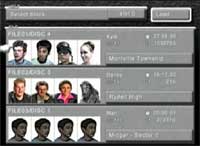
Character Selection Screen As is traditional with Squaresoft games, continuing a game in Ultimate Utopia will lead you to a character selection screen. The names for the three games are, respectively, Kyle, Danny, and Man. Kyle’s game has the characters we will learn to know and love, while Danny’s game seems to represent Grease (the area is called “Rydell High”), and Man’s game plays on the lack of diversity of Square’s NPCs – as all the characters in it are Man himself.

I’d like to draw attention to the fact that the only woman in all three save games is the one in Kyle’s game. Kyle Moore, the leader, has in his party: Tunaidi Ansari, James Yao, and Megan Greener. She is, predictably, the last character in line when the game opens on their location.

III. A Woman After Square’s Heart

Say What?As this flash movie is as much a parody of Squaresoft as it is a tribute, I was not surprised to find that Megan is the stereotypical magic user. Not just any magic user, however, but the physically weak healer. Her HP is a staggeringly low 191, as compared to the others who have anywhere from 954 to 1023. As the healer, her MP is the highest: 360, as compared to 54 (the highest MP next to hers). Her weapon of choice? The staff. It does 12 damage, yay!

Throughout the battle, Megan is trashed time and time again. Daniel, their adversary, takes her down to 11 HP with his first hit. Of course, instead of focusing on healing her, the player does a “heal all” which gives her back a whopping 5HP. Bringing her total up to 16. For his next attack, Daniel goes for “Copyright Infringement” and takes Megan down with a hit that does 571 damage. Can we say “overkill”? At least when she gets revived she’s back up to full health. For all the good it does her, seeing as she gets “blown away” in Daniel’s next attack.

When she returns, does she heal her party (like, you know a healer *should*)? Nope. Mr. Player (and yes, he’s a man) has her do an “MP Up” spell. Learn how to play! Well, perhaps I was too hasty in my condemnation; running through the movie again, I realize that her only options appear to be “Heal All” (fat lot of good that spell does), “MP Up” (another useless one), and “Suicide”. I’m guessing the fact that Megan is vastly underpowered is a critique on Square’s use of women, or at least I hope it is.

But, the torture of Megan is far from over. Daniel’s next attack, Clap, is a confusion spell. Which misses everyone but Megan, and stays with her past death. I mean swoon. I mean… what the devil are kids calling it these days? The caveat, of course, is that Megan lands the killing blow (while still confused) after all of her teammates have been killed by Daniel’s devastating “Apocalypse Now” attack.

IV. Conclusion

Like I said before, I liked this movie. It was a funny parody, a nice tribute, and having watched it a second time I’m beginning to think that it may have also been a subtle critique of some of Square’s staple archetypes (like the lack of NPC diversity and gendered stereotypes). And, really, I would much rather them deal with Megan’s plight (the plight of practically all female characters in one way or another) by drawing attention to it instead of having it be part of the background noise.


Updated Captcha

Okay, I know all of you hate the captcha with the burning fire of a thousand suns. Honestly, I’d love to get a better one (like the one blogger has), but I neither have the time nor the skills to seek out and/or code one.

But, as a stopgap measure I updated the fonts and the noise for the captcha I do have, so most of the problems with readability should be gone. Unfortunately, I don’t think the code comes with a way to ensure that the fonts stay within the image boundaries. I’ll continue to look into it.

Question: Is the captcha now easier to read?

And if you want to be really nice to me, I’d appreciate if you find one that the background or font makes it unreadable if you could screncap it and e-mail it to me. I’d say just describe it, but there are too many that are similar.


Request for Reader Opinions

I did some changing to my link list (the right hand one) in an effort to make it better organized. In essence, I created a “Feminism” section and split up some of my feminist blogs even further.

So, a few questions:

  1. Is the breaking down of the feminist blogs into several categories better or worse than what I had before?
  2. Do you think the category names are appropriate, or should they be changed? If they should be changed, what do you recommend?
  3. My link list is rather large, do you find it’s hard to navigate? If so, should I:
    • Leave it the way it is.
    • Put some sections on the left side.
    • Remove all/some links from the side and make a separate page just for links.
  4. My “More Feminists” category is kind of like my “Unclassified Blogs” category. Do you have any ideas for further categorizing the feminist blogs there? I would like to make one for feminist blogs focusing on sex/sexuality, but I can’t think of a good name.
  5. Do you see any blogs that are categorized wrong? Would you like your blog put into a different section? Please tell me and I’ll make the appropriate changes!

Any other comments/advice on my link list is welcome. The point is to entice people to visit the links, and if my list isn’t doing that then stuff needs to change.